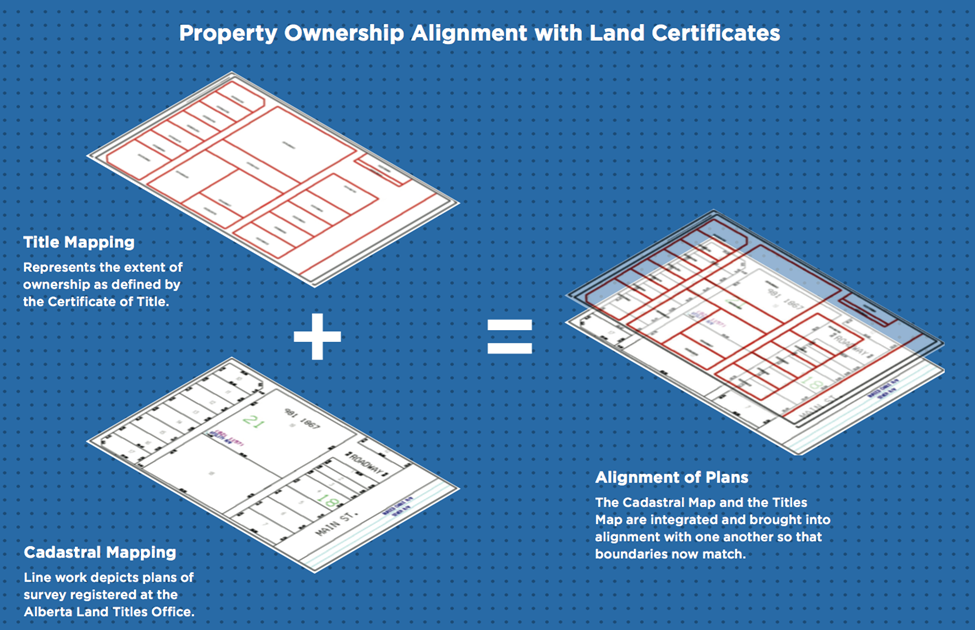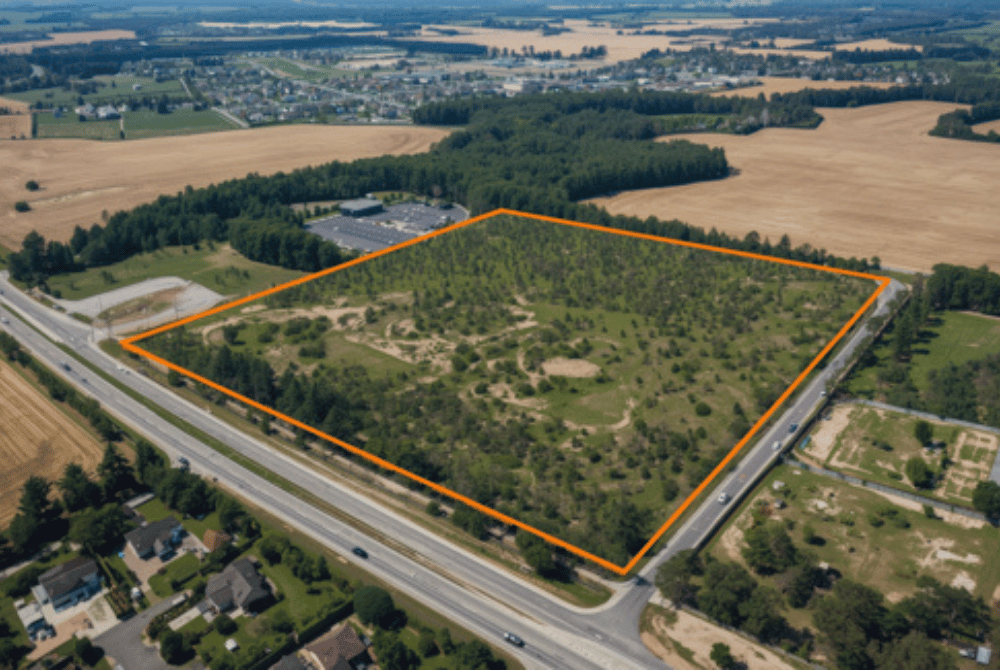
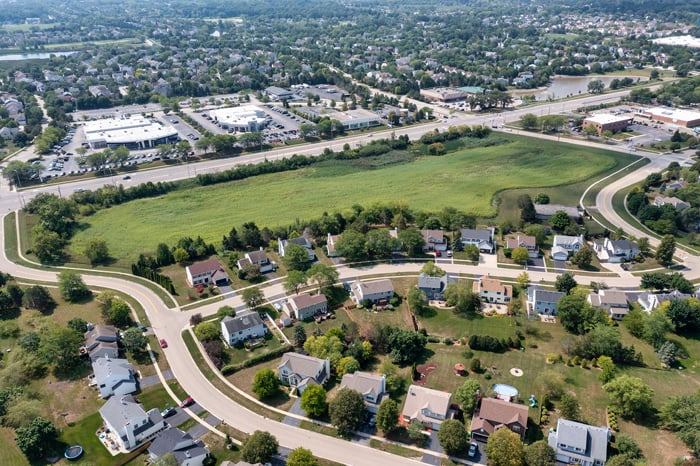
Watch the transformation as the Alberta Title Mapping Project develops a standardized spatial dataset that represents land ownership across Alberta.
Following the successful re-engineering of Alberta’s cadastral mapping system in 1998, the next logical step was to create a GIS-ready parcel dataset for every land title registered in the province. Launched in 2002 and funded by Alberta Municipal Affairs, the Alberta Title Mapping Project aimed to develop a standardized spatial dataset that represented land ownership across the province, excluding the cities of Calgary and Edmonton.
The goal was to produce a GIS-ready mapping product that clearly depicted the spatial extent of each registered land title, enabling improved integration with Alberta’s cadastral fabric. Over one million titles, including more than 300,000 metes and bounds descriptions, were
successfully mapped in just two and a half years using MicroStation (Bentley) and ArcGIS (Esri).
MNC (Martin Newby Consulting Ltd.) undertook this pioneering initiative to revolutionize the management and integration of land title data in Alberta. This endeavor marked a significant shift in how land information was managed and used across multiple sectors, including municipal governance, real estate, and resource management.
The new dataset was made available province-wide in 2005, and MNC continues to maintain it today, over 20 years later. The dataset comprises over 1.6 million titles.
No centralized spatial dataset existed to show the extent of registered land ownership.
Manual interpretation of legal descriptions, including metes and bounds, introduced inconsistencies and errors.
Title data was scattered across formats and sources, creating duplication and inefficiencies.
Municipalities bore the cost and effort of maintaining their own title mapping products.
Delays in updating cadastral and title information could take several months, impacting timely decision-making.

A solution was needed to streamline and standardize the spatial mapping of registered titles across Alberta, reducing redundancy and improving data quality for all users.
Click the download button to download
a PDF version of this Use Case.
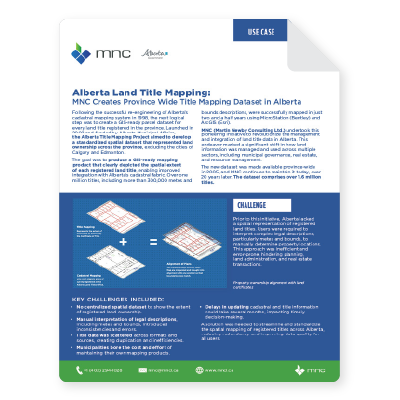
Created a master dataset linking each title to its LINC and legal description.
Converted historical textual metes and bounds descriptions into spatial representations.
Aligned title extents with Alberta’s cadastral base to ensure consistency and precision.
Constructed ownership polygons that accurately reflected the legal extent of each title.
Utilized MicroStation (Bentley) and ArcGIS (Esri) to map and manage the dataset.
Implemented streamlined workflows for efficient data capture, integration, and ongoing maintenance.
This approach resulted in a unified, authoritative title mapping product that could be maintained over time and accessed by both public and private sector stakeholders.
A single, authoritative title mapping product was established for province-wide use.
Redundant title mapping efforts at the municipal level were eliminated, reducing duplication of effort and cost.
A consistent and affordable title mapping solution became available to all municipalities, enhancing planning, land management, and administrative workflows.
By 2005, most municipalities across Alberta were actively using the dataset. Private sector stakeholders, including developers, land agents, utilities, and resource companies, also adopted the product.
Led by MNC, the Alberta Title Mapping Project modernized title data management across the province, improving accuracy, reducing costs, and enabling integrated spatial governance through a digital, GIS-ready dataset.
1M+
LAND TITLES DIGITIZED PROVINCE-WIDE
6 Months Early
& $600K UNDER BUDGET
Single Source
OF TRUTH ADOPTED ACROSS ALBERTA
MNC is a trusted leader in cadastral and parcel management with 25+ years of experience delivering GeoAI-ready datasets, modernizing parcel fabrics, and automating GIS workflows. As an Esri Gold and Cornerstone Partner with Parcel Management and State and Local Government Specialties, MNC provides scalable advanced GIS, ArcGIS Pro, FME automation, MicroStation, AutoCAD and cloud-ready geospatial systems that improve data quality and support government land administration modernization across Canada, the USA, and the Caribbean.