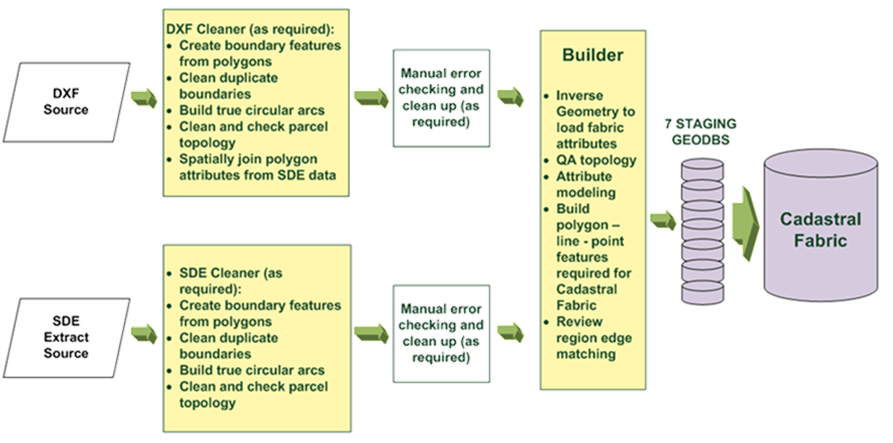

Watch how MNC delivered a GIS-ready spatial dataset that established a consistent and accurate framework for land assessment and planning.
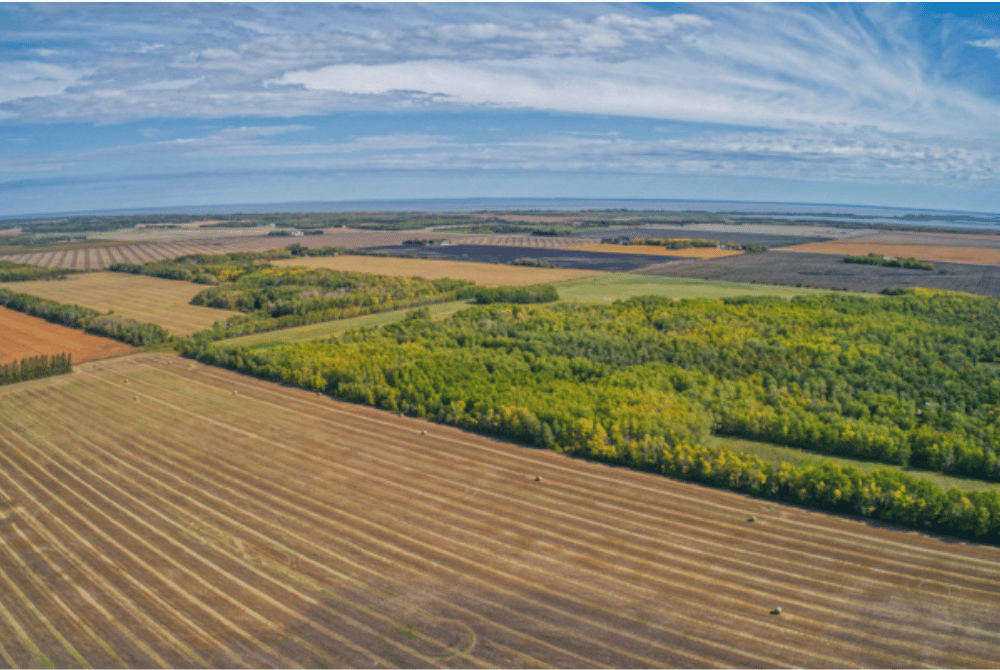
Before the start of the project, Manitoba’s land parcel data was fragmented and inconsistent. Parcel information was maintained by numerous data providers using a mix of outdated CAD files and GIS shapefiles, resulting in significant variation in both geometry and attribution.
The key objective of the project was to integrate 196 disparate datasets into a unified digital fabric that conformed to Esri’s Parcel Fabric standards, requiring accurate geometry and correct, consistent, and complete attribution. However, the condition of the source data presented several technical and operational challenges.
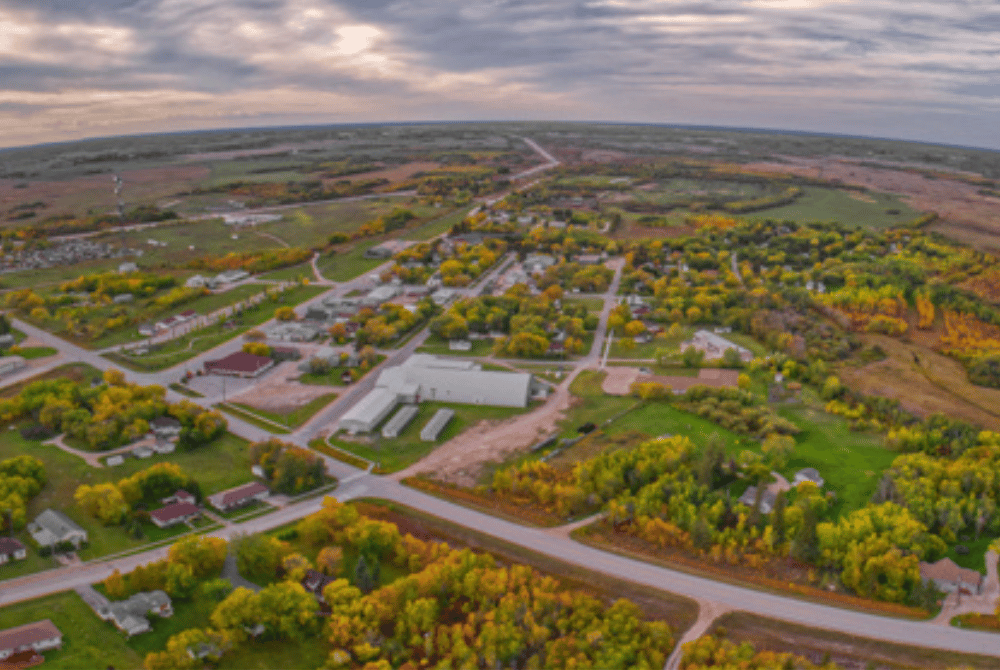
Overlaps, gaps, and spatial misalignments between parcel boundaries.
Inconsistent or incomplete attribution across datasets.
Varying data quality due to differences in how parcels were originally captured or maintained.
No standardized province-wide parcel fabric, which hindered planning and assessment.
The process of maintaining and updating parcel data was also labor-intensive and error-prone, with no centralized system for managing changes. These inefficiencies contributed to delays in subdivision approvals, regional planning, and land assessment workflows.
These conditions underscored the need for a comprehensive conversion strategy that could unify parcel data under a single, authoritative structure to support reliable community and regional planning across Manitoba.
Click the download button to download
a PDF version of this Use Case.
Collected 196 datasets representing over 347,000 parcels from municipal and provincial sources.
Included both CAD and GIS shapefiles in varying formats and quality.
Conducted thorough QA/QC (Quality Assurance/ Quality Control) to identify and correct errors such as gaps, overlaps, and spatial misalignments.
Standardized attribute tables to ensure consistency and completeness across all parcels.
Migrated the cleaned and standardized parcel data into Esri’s Parcel Fabric model.
This allowed for improved editing, versioning, and management of parcel data within a geodatabase structure.
Produced a single, GIS-ready parcel fabric with accurate geometry and complete attribution.
Ensured the dataset could be maintained and updated efficiently by provincial or municipal staff.
The result was a complete and reliable spatial framework capable of supporting complex planning, assessment, and land management functions across Manitoba.
Eliminated spatial errors and standardized attribution across the province.
Enabled municipalities and provincial agencies to conduct more reliable community and regional planning.
Reduced delays in development approvals and regional policy decisions by providing a trusted spatial foundation.
Streamlined data management, reducing duplication and the need for local governments to maintain separate systems.
Created a strong foundation for integrating Ortho imagery, zoning, and other spatial data layers.

Through MNC’s project leadership, Manitoba has a unified parcel framework that empowers planners, municipalities, and policymakers with the spatial intelligence needed for effective decision-making and sustainable regional planning.
ASSESSMENT ACROSS REGIONAL PLANNING AREAS
IDENTIFIED GAPS ACROSS PARCEL DATA AND WORKFLOWS
FOR GIS MODERNIZATION AND PARCEL FABRIC READINESS
MNC is a trusted leader in cadastral and parcel management with 25+ years of experience delivering GeoAI-ready datasets, modernizing parcel fabrics, and automating GIS workflows. As an Esri Gold and Cornerstone Partner with Parcel Management and State and Local Government Specialties, MNC provides scalable advanced GIS, ArcGIS Pro, FME automation, MicroStation, AutoCAD and cloud-ready geospatial systems that improve data quality and support government land administration modernization across Canada, the USA, and the Caribbean.